People of Video,
from the first day we started TwentyThree,
we've been curious about understanding the power,
the force,
what video is.
The ability to capture the moment over
time here in the ground hay garden scene
from 1888,
where we really see the power to capture,
it's the oldest video that still exists,
to the world we're living in,
where we suddenly were able to not only
capture in this kind of invention phase,
but the ability to transmit over time
and distance what we had captured.
The photo here is from the late Queen Elizabeth II's coronation,
the first time that everyone just came to the ground,
they just didn't read the day after
what happened in the abstract text,
but they were in the room together with people.
When we look at video,
it's really one of the foundational technologies of our time.
It's television,
the ability to transmit over time and distance a human experience.
It can time travel,
it can capture something that happened before,
or it can do geographic tracking,
it can do graphical travel over time and distance,
so that you can be connected to a human person
that is somewhere else in the world.
It's actually quite wild.
Some say we were promised flying cars,
and we didn't get them,
but we actually got video, right?
A very foundational human technology of our times.
So when we look at video,
the challenge is that video is so big.
It's not a simple thing,
because it's a huge paradigm shift.
It's probably one of the biggest paradigm shifts of our times.
It's been running for a long time.
We're at this point 138 years into the video paradigm,
from the original invention phase with the ground-hay garden scene,
to film,
still happening,
just on streaming today,
television
that defined our times,
our culture,
our politics,
the home video,
when the crazy uncles started having a big camera on their shoulder
and wanted to record every party in
the family in the 80s and onwards.
And we're just about 15 years in
to this very recent phase
where video is pervasive,
that we can all capture the moment
with the device we have in our pockets,
and due to the internet
and 5G and everything else,
we can share it instantly with the whole world.
It is a little bit of a miracle.
When we look at it,
video is sort of the end to the old paradigm
that's been running for about 500 years,
since a great European technologist, Gutenberg,
defined what made
information able to travel over time and distance,
the idea of printing and the idea of text,
of language.
So,
that technology created nation-stage new culture,
poetry,
it created everything,
it created religions,
changes everywhere.
And that's obviously also what we're seeing with video today
and also why it kind of makes sense that
we have a lot of friction in the world,
because there's a lot of tectonic plates that are shifting around.
So, that's really where we are today,
where text
is being replaced by video.
For those of you who love beautiful abstract
text with a licks number that's so high
that no human being,
would ever say it out loud verbally,
aka the corporate press release,
or anything like that,
you would see that it's changing culture.
It's even at this point changing our verbal language.
It's changing our culture,
it's
setting the ideals as authenticity and human connection,
because we're all used to appearing on camera,
and we're all used to being on camera in video meetings
and everything in between.
So, together with the computer,
the smartphone with the cameras in it,
together with the internet that connects us all,
together with AI now,
video is one of those four core technologies of our times
that changes everything.
But video is also hard,
because we look at it with our old concepts,
with our old ways of looking at things,
our old prisms.
We
go for looking at it as a broadcast medium
where it's also a one-to-one,
medium,
a personal video.
We look at it in old ways and old concepts
instead of looking at it as this new,
all-new culture.
The challenge for us with video
is really how we get to reinvent everything.
And that is what it's all about,
and all the challenges of everyone in this room.
We are reinventing our artifacts,
our press releases, our product pages,
our symbols of life,
our emails are becoming video emails.
We are changing our processes, our methods,
because we are seeing them in a video world,
where we are becoming video first
instead of
video as a secondary thing,
or video as something that was very expensive
so that it was only used very rarely.
Today we are gathered here at the 23 Summit
under the umbrella of Video People Unite.
And for me, it's very beautiful
that all of you in this room are the early ones still,
that really get how big video is,
that understand the fundamental aspects of video,
and are willing to look at it with open eyes.
And I think that's why we're all so excited about video,
and why I wanted to start with a little love letter to video.
Good.
Then let's go,
perhaps with some slides that works.
I wanted to give you a quick update
on everything that happened the last year
and some of the trends we're seeing here in video
the last 12 months.
And I wanted to start with something
that I think is dear to a lot of our hearts,
our home, Europe.
So at 23,
we get to be one of the three global players
in the video marketing platform space,
together with our dear colleagues,
Vimeo in New York,
and Visti in Boston,
in the US.
And when we look at Europe today,
a lot of things have changed the last 12 months in general,
but also in technology
and also in video.
We are in a shift where we are starting to take care of ourselves,
to focus on our sovereignty,
of putting money into our own economies
instead of giving them to somebody very far away,
for our security,
and to adhere to GDPR
and other things that you can't do with non-European vendors.
So that's sort of the heart side of Europe just now,
and it's all big words like sovereignty,
which actually is only on a nation-state level
that you talk about sovereignty.
But I wanted to give you the idea,
and what we're seeing here,
that it's also more a personal thing for companies,
so it's something that's very kind of integral
to being an independent company
or having your own agency in the world.
If we looked at it also as a concept
of being able to do things on your own terms,
and you want to do it as a company and an organization,
from your values,
from your perspective,
from your DNA,
that you have your own data,
nobody else has the data,
you have your own brand and your own experience,
you control and have your own relationship to your customers,
you have your own website, your own app
that you can build the way we want.
The digital world was always, in a way,
the promise that we could do things that were diverse.
And multicultural.
And we could be what we wanted to be ourselves as companies.
Even as individuals, I guess.
So, think about
the shift to video just now
and what we're seeing with Europe,
also as a fundamental shift in digital
to not only shift to European video,
which people are doing all the time now,
we're seeing a massive growth in people
upgrading for YouTube and Vimeo and Vistia to 23,
but also as a way and an opportunity
to reset
what it really means.
Last year at the 23 Summit,
we announced that we are committed to shifting 100%
to only running European vendors
for every component we use for our infrastructure
in our 23 Cloud.
And I'm happy to report to you
that we're just a few weeks away from being fully done,
so that
all our spending is going into Europe,
just as we're seeing our customers,
and our spending is going into spending on European companies,
building our own economy,
building our own culture,
relating to each other,
creating something together.
So that's quite magnificent.
So think about a massive shift just now
of getting rid of all the tech that's not European
to actually adhere to our laws,
but also to build our economies
and to build
a new way of thinking about what digital is.
Another trend I wanted to highlight
that we've been seeing a lot this year
is really the emergence of the video organization.
This year we started seeing multiple people,
still weak signals,
but some of the best video people in the world
suddenly became head of video,
where they were video producers before,
which we still think is the core kind of game changer,
change maker title.
We've also started seeing vocabulary like video teams,
that,
okay,
there is actually a video team of 40 people,
I think the biggest one we've seen is 200 people this year.
So we are really seeing organizations
starting to orchestrate around video,
hiring for video change makers
that can come into their organization.
The people who have been doing it for a few years
and actually
have a unique experience
being very sort of attractive on the job market
because they can go in and transform a company,
not only produce the videos,
but transform the company to be video first.
We are also seeing that video is getting more and more broad.
Historically it's been in communication and marketing,
but it's really getting wide across the organization.
Especially on the sales side,
we are seeing a lot of,
on really using with personal video
to drive engagement and one-to-one communication.
We've also seen the first board meeting I've ever heard about,
where one of the largest banks of Europe
spent one and a half hours in a board meeting
discussing their video strategy,
why video was driving considerably more engagement,
why the people who were engaging with video and webinars
in their organization had a very different behavior
and were more attractive than others.
Those are weak signals,
but the minute we start having that board level
and that strategic focus on video,
you know things are changing.
We are also seeing in most places
the average video engagement,
being above 50% now,
and even in some places above 80%.
That means that 50 to 80% of the time
your relationships,
your customers,
your stakeholders
are engaging with your company is video based.
Also triggering a lot of heads of video,
video producers who say,
should I get 80% of the budget or 50% of the budget,
obviously.
So it's also a great change maker number
to know in your company
to drive the right focus.
When people hit a website,
they are there for an average of 1.5 minutes.
Obviously if you play a five minute video
as part of that session,
the majority will be video based.
We're also seeing on the websites
this very simple kind of basic concepts that
in a lot of places more than 50% of the pixels
on the website is video.
Very simple.
But you know that's also an element
of seeing this kind of massive change
also as we
rebuild our websites
to be video first.
Last year at 23 Summit
we launched a lot of elements to be able to make your website live
with webinars, so there's like a live takeover
spots to really put all the video elements on the place,
video sections,
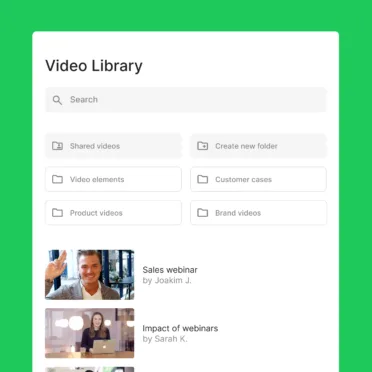
so you can create your own YouTube
on your own website with all your videos,
your own webinar hub.
So we're on this massive rediscovery of the website
and video is at the core of fixing that.
Another
thing we've seen the last 12 months
is really the evolution of the language of video.
That
we have all these terms that are being thrown around,
we're starting to create concepts and language
around video specifically.
How many of you have a video strategy?
That's become one of the iconic questions this year.
We have strategies for most things.
What is your video organization?
Who is the video change maker in your company?
So we're seeing all these elements of the video
sort of movement really starting to shake up.
The minute a movement starts creating language
is when it really starts moving.
And we've also sort of in a lot of instances
starting to see this rise of video
of realizing that video is not sort of a small thing
or video is not a little subset of digital
but it's really something in itself
and it's actually fixing a lot of the core challenges of our times.
Video driven websites is the way to take the reliance
on big tech and social media platforms away
to drive engagement and
experience to your own platforms
where you have
the control over the experience
that's on your terms.
That webinars is really creating all
these authentic human touch points
in a digital world that has a lot of self-service
and a lot of e-commerce and a lot of frictionless thing.
It's creating the friction.
It's creating the orchestration.
And that we on accessibility are seeing a lot of movement
that video really makes it accessible to those 30% of the population
who are not strong readers
or those that need a different language
or have other types of accessibility needs.
At 23 we've consistently seen a lot of growth
53% growth year on year
in new videos.
So yes, people keep doing a lot of videos
and we've even on webinars seen a 9% year on year increase.
So everyone thinking that webinars
was a COVID thing that would go away.
It just keeps on growing.
It keeps on delivering for customers.
Not at the crazy 80% growth level
but we're definitely seeing some customers doing really well.
Another aspect we've seen the last year
is that we've gotten to a market estimate
of 32,000 video production companies and video agencies in Europe.
That's quite a substantial economy.
So we're seeing this massive video economy of agencies
and everyone working in companies.
There are people who estimate that more
than half a million people in Europe
actually work every day
on video already today.
And the number just keeps increasing already.
And then
on the agency side,
a topic dear to our heart.
More than in 1995, more than 30 years ago,
I launched one of the Europe's first digital agencies.
I dropped out of high school
and two months later we built LEGO's first website globally.
So we know and
understand and appreciate the idea of the agency as a change driver.
The video agency
is this new agency
for a video world.
And what we're seeing this year
is a lot more shift of video production companies
shifting to becoming video agencies.
Of
spin-outs from larger agencies
on becoming a video agency in itself.
All new video agencies being started.
Even some of them by people who have been
video change makers in a company.
Which is quite an interesting new pattern
that you're seeing a lot of the change makers
that have been working in one company,
seeing that what they've learned
the last few years
are very relevant to a wide audience.
So last year we launched the video agency model.
And on our website we have a lot of info and framework on this.
On the business model, on the competence model
of the video agency being this agency
that not only produces video
but works
with the upping the capabilities
to produce video in the organization.
Works with the team already doing video in-house.
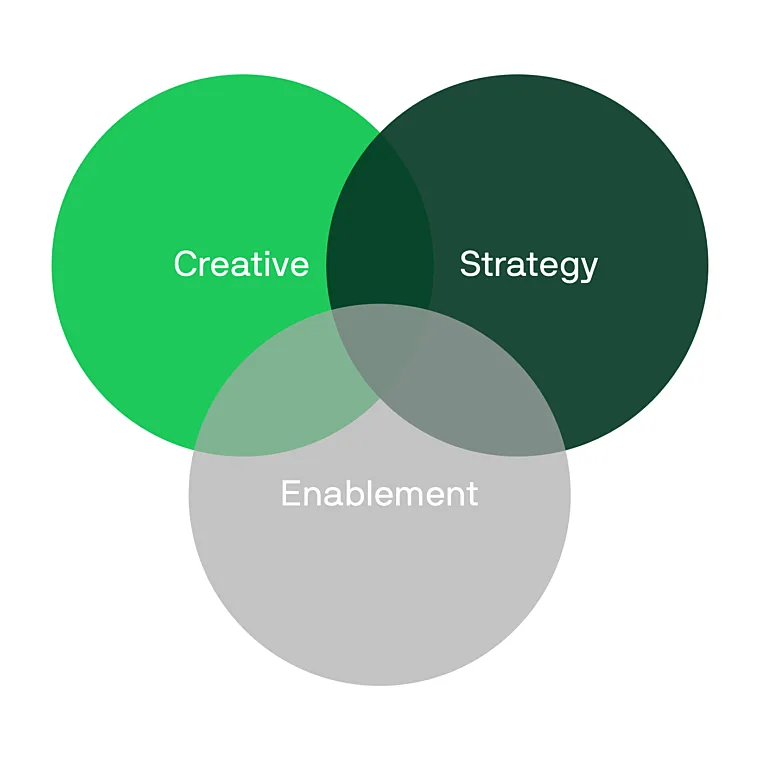
On strategy, on enablement, on training.
And all these different elements.
So that's a few things we've seen the last 12 months
that are really moving a few of the short-term trends.
But let's get to some of the new things
we would love to announce today.
A topic dear to Europe
and something we need to take even greater care of
is our new companies.
The startups.
And today,
we are announcing and launching a new program
to make sure that every company in Europe
that needs to shift
to a European video marketing platform
has the ability to do it.
Some of the big companies who have been dominating
the last 20 years of our world
have always been incredibly good
at doing startup programs of getting in early
when a company is just new and getting going
and supporting them with the ability
to use their products early on
before they financially can afford it.
So today,
we are launching the 23 Startup Program.
It's a program that gives 10,000 Euro in credits
to every bootstrap company or venture-funded company
through a venture capitalist
or our agency partners
that can grant the credits to a company
less than three years old
that is a startup that's just about getting going.
Because we believe that
one of the missing pieces in Europe
is also really great communication
and great marketing, great product marketing.
Webinars with product launches,
webinars that get you excited,
storytelling that drives the world
compared to kind of the more industrial,
old school way of thinking
about communication and marketing.
So with the 23 Startup Program,
every company in Europe can now
every new startup in Europe
can now afford to be getting on 23
from day one and getting going.
Second announcement we would love to...
Yeah, give it a hand for that.
Thank you.
Last year at 23 Summit,
we announced the video accelerator
because we saw a deep need
for driving
the development of methods,
of practice, of frameworks in our industry.
Because the paradox of video is always
that it's so big already,
but it's also a little bit immature in other areas.
Last year we launched a video strategy framework
and we've been very busy on it
to tell you about what the video accelerator
have been up to and announce our latest framework.
Please welcome Head of Client Strategy
and the video accelerator at 23, Dan Duffet.
Thank you.
It's fantastic to be here.
And to the video accelerator,
as Thomas said, we developed that last year.
And effectively,
it's a collection of frameworks,
it's thought pieces,
and it's tools.
And the reason that we put this together
is because at 23,
we care tremendously
about developing the video category.
We see ourselves obviously as leaders within that
and we really see our responsibility
as driving video forward.
And on top of that, obviously,
we love to work with our clients with these tools.
And the accelerator started with video strategy,
which we felt to be the umbrella piece.
But over the course of its development,
we're working with a video brand framework.
We're working with video-first websites.
And the video agency model that Thomas talked about.
And what we also do with this framework
is we create workshops with it.
So we bring it to life.
And I'm very proud to say since the accelerator's inception,
we've worked with over 40 of our clients,
either in collective groups or individual groups,
on different frameworks
to help drive their business forward.
And one of the frameworks that we've been focusing on this year,
and we're very pleased about,
and I will be talking a little bit more about tomorrow,
is the webinar framework.
And so to put this in a little bit of context,
when we talked with all our clients,
there was no doubt about it,
webinars were incredibly useful.
There was also no doubt that the content they had
was plenty to develop those webinars.
But when it came to creation and execution,
there was a little bit of a lag
because they needed to,
they needed to focus on tying it to clear objectives.
So with that,
what we felt was a useful thing to do
was to develop what we believed to be
the nine clear types
of webinar that existed.
And with that simple reframing
and giving each webinar a really clear name
that could be linked directly
and deliver against a clear objective,
it simplified webinars.
And what we've since found,
so let me give you an example, though.
So if one were to,
if one wanted to drive loyalty,
okay, well that's an episodic webinar.
Or if one wanted to have a really high touch point,
that can therefore,
that could be an exclusive webinar.
And so we've been soft-rolling this out
with the webinar managers within our client teams.
And it's so far received
And the last thing I probably would like to say on this
is this part here that you see up,
these nine different types,
they actually sit within
a slightly bigger framework
which helps
clients and customers focus
on how they can create,
how they can execute,
promote and activate webinars.
So this is one that I'll be talking about tomorrow
and I certainly look forward to seeing
So thank you very much.
Thanks,
Dan.
So everything we're doing with the Video Accelerator
is open source,
so everyone can make their own version of it.
We're open sourcing also the slides.
You can easily tweak them to your own
or make them your own
because we're doing this to really drive the field forward.
Now let's talk a little bit about 23
and talk a little bit about product,
because that's ultimately at the end of the day
which is what is our core essence.
At 23, we've since 2009
been driving this
maturity in video forward
of giving you the tools to do video.
From the very origins
to the first, second generation webinar product
to the video marketing platform,
a term now used by all our competitors,
and to here in the last recent years
of being the first ones in the world
that achieve having all the different elements
to video enable an organization
and the last few years also putting it all together
so it works together
as one in synergy with each other.
So today we are able to enable everyone in your company
to do everything, every type of video
at every customer touch point
from a potential customer to an existing one
to one-to-one communication and everything else.
It's really maturing the category
that all these things works together.
It's a stunning experience being there
in this very visual rich user interface
where you do everything you need to do video,
where before you would need five different tools to do it
that didn't talk to each other.
And as these things also tools changes behavior.
All the things you knew you wanted to do,
you suddenly do when they take two minutes to do.
When you're done with your webinar,
you make the clips because it already has suggested the clips
and post them on your website.
You can put them on social media.
You can distribute them to all your team members
so they can use them in their work
just with a few clicks of a button.
Last year at 23 Summit,
we launched AI translations and transcriptions
defaulted product.
A lot of tools on the video driven website,
on the video branding,
on webinar six, on the content studios.
You can create content from your videos,
blog posts, social media posts and webinars.
And last year,
the ability to do your very own video app
and put video into your apps
if you have an app
for your stakeholders or audiences.
Basically being able to build your own streaming platform
in a few days.
Today, we're going to dial it up a notch further
to be on this charge
to really video enable an organization
and really mature video up to be the frontier software category
of all the different tools you use.
Let's start a little bit with the webinars.
Webinars is this incredible word,
web and seminar.
It's originated in the 90s.
Nobody knows where the word came from.
It's the digitalization of events.
The last thing that digital hadn't touched,
the ability to create digital events
that were not physical only.
And it's also sort of the live participatory side of video.
It's a little bit more unscripted.
It's a little bit more human.
And it's a change in our digitalization
of the engagement model
where the whole innovation was
the shop was always open at all times.
I can always visit the website.
But it's all the same all the time, right?
And we as human beings,
we need drama.
We need orchestration.
And that's what webinar also creates.
You can only get this information
first day at 2 o'clock where we have the webinar.
It's not just always on.
Throughout the years,
we are shipping our webinar product on an annual basis
because webinars is really the toughest product category
you can ever imagine.
It always needs to work.
And we're mixing 8 video,
4K video feeds in a browser.
So it's quite a technological miracle
that these things actually work.
So we ship them on a big annual basis
to make sure that we really harden the products.
Today,
this is where 23Webinars is.
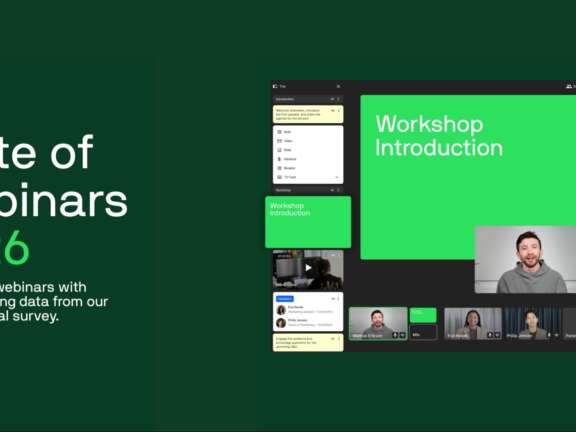
Stunning innovations like the webinar tray
we launched a few years ago.
Some of you in this room have called it
the biggest revolution in webinars ever.
That gives you a mental model
and the outline of your webinars.
Both great if you're doing a lot of webinars
or if you're just starting out.
Or you can template them so you can put other people
to do the webinar very easily without
actually having all the notes
and knowing everything about doing it.
Today, we're going to take a big step forward
by announcing 23Webinars 7
with some
key world's first innovations in it.
The first thing
that I want to talk about
is really sort of these two different worlds
of doing webinars or live video.
Which is that the webinar software
sort of has been in one side
and then you have all the production gear
and software that the people are using
on the other side.
And it's sort of two different crowds.
Some adhere to their production gear
or to their mixing software.
Which is great if you have a set up.
Obviously, we're driving these things
and so today
we are putting these two worlds together
for the first time.
The ability to use all the power of a webinar product
but also use your gear and your video mixing software
that you have in your studio
for when you do live.
The first thing is Mix Mode 2.0
which takes mixing to a whole new level.
At 23Webinars, we've always been able to mix.
You can sit and mix.
We believe in people producing.
And experience and not automating.
But now you can also create a new mix.
Live in the webinar or beforehand.
So if suddenly there's three people on
or there's some action discussion
that you really want.
You can with a few clicks of a button
create a new mix.
The way you want it, name it
or just use it and mix to it
when you've set it up.
So you're able to sort of set up mixes.
You can do it on an organizational level
also of creating templates for it.
With Webinar Studio
you're able to
have full design flexibility
on everything you're doing in the webinar room.
So you can put backgrounds.
You can put rounded corners.
You can really get the experience
to be your brand.
So for the first time, webinars are not
something that looks like a video meeting software
that auto mixes in peculiar ways.
But you can really get to that
high level
and you can also really
enable your team to do it.
If you invest the hours centrally once
to really put in your brand and your DNA into it.
And then everyone doing webinars in your organization
will have these abilities.
And lastly,
we are announcing Gear Mode 2.0.
So Gear Mode is the ability to use your
mixing gear
to put in your feed into the webinar.
But until now,
it's sort of replaced
most of the webinar features and sort of took over
and didn't really work with the webinar software.
So with Gear Mode 2.0
a feed,
whatever feed it is you're mixing from
will pop in the speaker bar just as anything else.
So you can mix together people that are remote
and all the graphics features
and all the webinar tray and all the other elements
of the webinar product.
So with this shift in Gear Mode, Mix Mode
we are really making it
you're able to do great things in the webinar studio
to orchestrate it to really make the webinar room
your own, on your own terms.
And make it be part of any other type of experience
that you want.
And the ability and the creativity to really do great mixing
both templated,
pre-programmed
or on the fly if you're a little bit more freestyle
that you see an opportunity to do that.
And to really do an interesting mix that you want to set up.
You can pan,
you can zoom,
you can do all the different elements in it.
So that's the first thing in Webinar 7.
The second thing is Thumbnail Studio.
Because even though webinars are about webinars
every webinar starts as a thumbnail.
And that's a big barrier because you
need to run a whole creative process
you might have templates for it,
you need to get another team
to do the thumbnail.
There might be different thumbnails.
And it also increases the friction and cost of producing the webinar.
So suddenly or if you're doing a hundred webinars at a time
it's a whole different ball game also.
So we really wanted to enable you to do better on that.
So the thumbnail is the essence of any webinar that you know
on the landing page, on social media.
And there are a lot of different
styles and methods of doing thumbnails.
So with Thumbnail Studio
for every webinar
you get all the different thumbnails
that you need for different platforms.
You click it, you use it.
And you have the ability to use it on the landing page,
on social platforms.
And with the Thumbnail Studio you're also able to
design your templates on an organizational level
with your agency to really set up the template.
So if you're running those 500 webinars, you're able to do that.
And you can do that in a year,
which a lot of our customers are doing.
Or you're scaling your webinar programs to do relational webinars
where you get your hundred account managers and market people
to do the same webinar to their audiences.
Now there's no more friction to really just clicking go
and create a new webinar and also having
all the elements in there that you need.
So
for now the thumbnail will no longer be the limiter
to doing a webinar.
To show you everything that is Webinar 7,
I think we need a demo.
And at 23 we love live, real demos.
And no cheating or kitchen tricks.
So please welcome Stefan Fagerström Christensen,
CTO and co-founder of 23 for Webinar 7 Demo.
Thank you everyone.
It's always nice to come on stage and be
introduced as a technological miracle.
So I'll sort of start from that point.
I'll show you how to use Webinar 7 and some
of the things that we're announcing today
using our demo company called Rangoo.
And they're setting out to do a drone webinar.
You know the webinar room in 23.
I can do all the things that I'm used to about playing out video,
showing TV cards and showing overlays,
all that kind of stuff.
But what's really cool is I can also mix between different people.
And now with Webinar 7 I can also add new mixes.
So say I want to have a mix where I have Cecilia on the left
and Aridas on the right.
I can now go and save this mix and I
can mix to it with stunning animations
and I get the full control of everything
that's part of this mixture as well.
But also say that I actually want myself to be in here.
So
I will be Cecilia and Aridas and myself.
And now I have a few different views that I can mix from.
So this gives you all the power that
you would need in order to actually run
fully staged webinars with all the people that are in here.
What's even cooler is that when I'm starting
to set up all of these different views,
I can also zoom and say,
well actually Aridas should be zoomed slightly more.
I might want to center Cecilia in the frame a bit.
And I certainly want to fix myself
to be kind of positioned correctly.
So there we go.
I can easily mix all these different things.
This is a pretty generic room for just the standard webinar stuff.
But what I would also want to do,
I might actually want to design my room as well.
So being this demo company,
I can set up custom designs and custom mixes
that will allow me to not only have the standard
views but actually to design the full stage
just as you're used to on any other tool.
So now when I go and create a new mix here,
I can set it up with the right people
in the right places
and literally just go and mix between them.
These create a lot of new opportunities with Webinar 7 within 23.
And if you're connecting from your studio,
multiple different feeds,
whether that's from vMix,
from Wirecast,
from OBS,
or from your dedicated studio setup,
all of these feeds will just come in
here and allow to be mixed within 23.
So that's a quick view at Webinar 7 in 23.
Thanks,
Stefan.
So that's Webinar 7.
A magnificent big release of what is already
the leading webinar product in the market,
but we're going to keep upping the game here.
23 Webinar ships June 25th in a few weeks from now.
And I'm sure you can also be in on the preview release
if you really want to try it out before anyone else.
Then we wanted to talk a little bit about AI.
And AI is obviously a topic that means a lot of different things.
For us at 23,
we've been very heavy on using AI to try to make video better,
not to replace human beings or make fake human beings with video,
but trying to be more creative, do more,
and really move and use these magnificent tools
to augment and make us even better as human beings and organizations.
So today we want to take a big step forward on that journey.
As some of you know,
one of the things of AI is really what is called Agendic.
And Agendic is not per se really necessarily about AI,
but it's really sort of this evolution
of computers talking to each other.
In Web 2.0 20 years ago, it was called APIs,
or the term was sort of the fluence of
everyone having an interface to their product,
to their applications.
You could make them talk to each other.
And Agendic obviously takes that to a whole
new level and a whole new ecosystem around it.
Agendic means that you can use your Gen-AI engine to query,
to do analysis,
to do reporting,
to do workflow,
to do automation,
to do creation.
But so far,
video products have never really been
there connected to the Agendic world.
So today we're proud to announce that
23 is the first video marketing platform
in the world has support for what we call Agendic Video.
Fully connected to all your Agendic tools,
plug and play,
you're able to query,
you're able to automate,
you're able to innovate.
It's really a foundational technology
that allows you to do whatever you want
and really also innovate because we're still
early on the applications and the usage.
We call it Agendic Video because it's
really about connecting the Agendic world
together with the video side of things.
That you can automate creating a new webinar,
that you can trigger a webinar being created,
that you can query,
you can do pattern analysis in
all the data that's in 23.
It ships out of the box with full CLI support for OpenAI,
Cloud,
Copilot and Cursor.
And it allows you to ask questions like,
let's audit our category usage,
let's create some chapters,
let's automate and create a new webinar based on an action
that happened in a different system.
And it's a foundational aspect of really
empowering you to be on the journey of Agendic.
It's plug and play to install.
You just write eight lines or eight characters on the command line
and then you're ready to go.
Today we are launching it and it's available,
but we've been working with a great series
of CMO the last few months that's really on the forefront
and has put himself, after
30 years in digital,
into coding every day with Cloud
and being on this journey of seeing
what a communication and marketing team to be.
So to tell you a little bit about why Agendic Video really matters,
please welcome Rasmus
Skoljan, CMO of Hello Retail.
Thank
you so much, Thomas.
So fundamentally,
the past seven months we've been all
over AI coding at Hello Retail and
have been trying to adopt this as fast as
humanly possible to really max out what we
could do with this.
Fundamentally,
marketers are now builders,
which is such a massive change where at least
we have the possibility to be builders and sort
of connect and integrate our entire business
and our entire technology stack instead
of just being users of software.
And that's a pretty profound change for me as
a CMO that we can do all of these new things
with
the entire AI stack.
And 23 has been so kind to allow us early
access to their new Agendic Video features
and we've been putting that to a lot of use the past month or so.
And all of these things that we've built now
are actually in production on the website
and we're working on all of the ways that
we take full length videos and turn them
into chapters and using the transcripts for
things like the third audience techniques
where you can sort of mark down files to the
LLM crawlers and a bunch of different things.
But overall,
also just creating great user
experiences for the uses of our website.
So I am super excited about that and looking
forward to seeing how that moves forward with
23 as a great example of how we can do that.
And I think that's how I like to really
sort of plug new services into our AI stack.
Thanks, Rasmus.
It is really this incredible AI age we are
living in where you see 18 year olds being hired
just like the old days
and you see people like Rasmus really reinventing himself
and changing everything he thought he knew about
how a marketing team and communications team worked.
And it's really an incredible story.
Definitely look out for his video on this
in
detail one of the coming weeks.
Another element where AI is really fundamentally
reshaping a lot of the things we thought we knew
is SEO, search engine optimization,
how we're indexed by the search engines.
We've had a little search engine called Google
that's been defining our world since 1998.
But now things are changing.
With the G.U.
Gen AI engine optimization we're seeing a shift just in Q1 here.
There was 25 billion visits to Gen AI platforms.
And just a week ago Google announced
the most major change in their history
that they are shifting from search
to AI search.
And the power of having all your videos on your
website on your own experience indexed driving traffic,
driving attention,
creating the experience you want is
obviously that you are discoverable.
So
with the new features in 23 on G.U.
and C.U.
we are making sure that in this very changing
and very rapidly changing world
that all your content is still indexed.
That your videos,
that your webinars pop up with thumbnails,
with previews and with the text
and the
transcriptions that you really want.
It's really simple.
You click a button.
To enable further SEO
or to enable G.U.
And you can even also use our advanced auto
enrichment to really keep driving it very easily.
On each video and webinar you have a little optimization
tab that gives you an indication of where you are
on search engine optimization and G.U.
for the specific object you're looking
at whether it's a video or a webinar.
And gives you suggestions and improvements automatically.
From the content and the A.I.
transcriptions that we already have.
So
with these features we're really making it and using A.I.
for the power of doing something
of making your content accessible.
Not trying to do anything that leads to a different path.
The last few months we've been working
with one of the leading SEO and G.U.
agencies in the world.
So to tell you a little bit about why the G.U.
and C.U.
video tools really makes a difference.
Please welcome Andre Riberino
from PageRadar.
Thank you.
Hello everyone.
It's great to be here.
Thank you Thomas for the invitation.
As Thomas has mentioned the world is changing.
And actually I have to say that the world has changed.
Just last week Google announced the biggest change in 25 years.
The box that we all know has the place where we do a query.
It now has changed to something that says ask Google.
And Google will determine if those answers come in an A.I.
answer or if they come in the traditional
way that they show the answers.
The other big number that we can see that the
world has changed for sure is that Open A.I.
has announced that they are now doing
almost a billion users per week.
And they're growing three to five times per year at that level.
So imagine the amount of people who
are now searching and looking at A.I.
in a completely different way than
they were discovering content before.
That's for me a major opportunity for video.
Video is uniquely positioned
to
get those answers to be especially the kind
of video that we're talking in this room.
The real video made by people,
made by a webinar,
event-based video.
It has the unique characteristics that Google and all
the other LLMs are looking for in original content.
Google has said also a number of times.
That they don't want commodity content.
They don't want the same content that we can all go on ChatGPT
or any other tool and create the same article for everyone.
And so video is actually uniquely positioned
to get the value out of this new world.
And the kind of video that we're talking about
here has a lot of advantages in that context.
At the same time,
I would say that the amount of video that this room has together
and it has published or is in the process of publishing.
Imagine if this video is translated into a way that LLMs
and ChatGPT and all the other tools can actually understand.
I think we are opening a whole new door to getting
video to be used to getting new business and
new visits and new visibility to our businesses.
Thank you.
Thank you, Andre.
So 23andAndre is today's speaker.
And today also shipping open source white paper on GUNC available on
our website to develop the methods and the practice around doing it.
Then lastly,
we want to talk a little bit about studios.
These magical places where creation happens.
Not the video studio,
but the studio where the design and the engineering happens.
The last few years,
we've been on a journey to take
23 up to the very highest level in the world.
On developer experience and designer experience.
To really make you able to use it the same way you would
use a cons management system or another design system
to template to create experiences and work your brand.
So today,
we are announcing the studio family in 23.
The web studio,
webinar studio,
player studio,
brand studio,
exchange,
API studio,
thumbnail studio,
and email studio.
And you see there's a lot of studios here because it's
about really being able to control and do everything.
With the studio environment,
you have all the developer tools and
tracking and deployment to really work it.
With the player studio,
you can write code to have your own player.
Not somebody else's player.
Your own organization's video player.
Design it the way you want with the behavior.
You can do it drag and drop easily,
but you can also write the code if you want to.
With the webinar studio,
we're making you have the ability to design every element
of the webinar room for the first time in the world.
And with the web studio,
you're able to develop the video section,
the video landing pages,
and the webinar hub aspects of your website.
And as we spoke about with the thumbnail studio,
you're able to template all those thumbnails that you're creating.
Everything has 100% design flexibility
and is beautiful and stunning.
So to give it a demo, let's hear it.
Let's see if we can get a demo going on the studios.
Exactly.
At 23,
we are extremely excited about building for the web
and letting you guys build your own things for the web.
So this is in our heritage in terms of
being able to build out everything from
what we've shown multiple times before.
This idea of building full on web pages now
called the web studio that's part of this
full on branding capabilities within
23 as well with the brand studio.
And today we're launching a few new features.
We're launching a few new studios and I want
to take you guys for a quick ride through that.
First up, let's look at the thumbnail studio.
So the thumbnail studio is the stunning place
where I have all the different thumbnails.
It might be the flyers or the social thumbnails
or indeed anything else directly in my studio.
And I can go and customize that.
I can obviously go all the way down to write the code I want if I
want to change all the colors and everything else that's tied to it.
Or I can make something really simple like uploading a logo.
So
this
is sort of the baseline for being able to innovate
all the different thumbnails that you're
building into your videos and into your webinars.
Going further on,
we're also launching our player studio.
So players are fundamental for everything video.
These kind of fast players
that you want to make sure load quickly,
play videos quickly,
but you also want to make sure that they are your own.
So with the player studio,
I can navigate between all the building players.
And also the players that I'm building.
I can go and for example,
preview this player with a different video if I wanted to.
I can go see how it looks in different scalings.
I can even pop out a new window and see
how it would work in different devices.
And I can go and do all the things
that you would expect from any player,
right?
Being able to control whether you show a description,
show a download page.
You can control how recommendation works.
Go down to change all the accessibility settings.
Like control the default settings.
And control how subtitles work.
You can also go all the way into the code base.
And write your own code.
I just need to make sure I find the right one.
And control every line of your players.
So you could write your CSS,
all the different for the player.
You can even control how video is being played out.
And when you're ready to go,
you just deploy the player code.
And it's available to all the people that have
your videos in front of them.
Whether through websites.
Whether through video landing pages.
Webinar hops, webinar rooms, spots.
Or indeed anything else.
And then finally,
let me take you to the webinar studio.
So
before I showed you guys a sneak peek of how does it look
when I mix stuff in the new webinar room with Mixed Mode.
This ability to do branding for things.
The webinar studio allows you to control
everything that goes into the webinar room.
Including
all the backgrounds.
How do all the different cards in there work.
I can obviously go in and control the actual
design for my branding on any TV card.
And I can control every mix as well.
So if you don't like how side by side views work in Twin Free.
Well you can go and create your own one.
You can say,
well actually side by side should be like this.
And hey, it's going to be automatically updated.
And then when you run your next webinar,
all your side by sides will look like this.
I showed you before that you can customize a lot of different views as well.
So
you can control how panel view works.
Controlling how does it work when I have two people on stage.
Four people or six people on stage.
And I can also go and create my own mixes.
These are the mixes that are available to all
the people that are hosting webinars in the room.
So if I wanted to have a different view,
I could actually go do that.
Or I can even create my own layout.
And say,
well actually in this particular view I would
want some media coming from my webinar tray.
I might want to have.
That's good.
Let's see.
I might want to have a few different speakers in here.
So I could
add more speakers if I wanted to.
Sort of place them here.
And control how everything else looks.
I can go further down and control for example,
should it have an outline.
How do I want to animate because it's not going to be animated.
What
is the background images?
What are the background videos?
And even add text and other pieces to the layout.
So that's a quick tour of the new studios in 23.
Joining web studio,
brand studio and a lot of more.
We're now launching the player studio.
The thumbnail studio.
And the webinar studio.
Thanks, Stefan.
Great.
So to sum it all up.
Thank you so much for joining the 23.
Keynote in 2026.
We are at a critical time for Europe.
To build our own.
To use our own.
We are at a critical time.
And we're very proud of 23.
Of building real technology.
Real hardcore European technology here.
We are deploying the 23 startup program.
To make every startup in Europe able to use 23 out of the box.
We are shipping the webinar framework.
Inspiring new agencies.
To develop your webinar methodology.
Webinar 7.
To take your webinars to the next level.
Agendic video.
To plug the agenda.
Together with your video marketing platform.
All the studios.
To really build all those experiences.
And get your developers and designers.
And your agency.
And your in-house team.
The ability to really control the video.
Just the way they do everything else.
Instead of video being the orphan child.
Where other people are the child.
And the rules apply.
And all the tools to do SEO and geo.
In this rapidly changing world.
So on behalf of me and Stefan.
And everyone at 23.
Thank you so much for being on this incredible journey.
Together.
Of building things.
With customers.
With partners.
We are working very hard every day.
On giving you the ability to video enable.
All your team members.
At every type of event.
And every type of video.
Whether it's personal video.
Webinars.
Or on demand video.
Thank you so much.
And definitely try to sign up to a trial at 23.com.
And we're happy to help you.
And be on the journey together.
Thank you so much.